When Abdul Hamid was deposed, Sir Ahmed, being in the inner councils of the "Young Turk" party, was appointed Vali [governor] of the Province of Van [in Turkey]. At this time the success of our [missionary] schools and hospital [photo above] was attracting attention. Our treaties with Turkey gave us the right to own property and to prosecute our legitimate business and to have our premises and persons inviolate by Ottoman officials.
But Sir Ahmed was so tyrannical that, harking back to Mohammedan [Muslim] law which says that a foreigner may live in the country and do business unmolested for a year and must then either become a Mohammedan, quit the country or become a slave and pay tribute, he dared to announce that he would have the American doctor deported [Dr. Ussher] and the hospital and schools closed.
Before deporting us he, as a conscientious Mohammedan, would give us a chance to accept his faith. It was Ramadan, when Mohammedans fast absolutely from sunrise to sunset throughout a lunar month. On the fifteenth day of this fast many Mohammedans invite "Infidels" to an evening feast for the purpose of converting them to Islam. To such a banquet the Valis invited the male Missionaries of Van, Protestant and Catholic...
The dinner's first question: What is the true way of salvation?
Sir Ahmed sat at the head of a long table. Doctor Raynolds was at his right, and next to him a Chaldean Catholic Bishop. The writer was at the Vali's left, and around the table were Catholic priests and Turkish officers. After we had feasted on a delicious thirteen-course dinner, a sweet and a meat served alternately, each dish a separate course, the Vali opened the religious conversation by addressing the black and crimson-robed Bishop:
"My Lord Bishop, will you kindly tell me what you think I must do to enter Paradise?" "Your Excellency," replied the Bishop, "if you will permit me, I believe that God, for Jesus Christ's sake, pardons my sins and will receive me into Paradise."
"No, Sir," said Ahmed; "I cannot accept that, for I believe God to be absolutely just and righteous, and one who is absolutely just cannot show favoritism. I am Vali here and my power is practically absolute. You might have a friend in prison for debt to the Government (Turkish law imprisons a debtor until his debt is paid); you might come to me and say, 'My friend is in prison for debt which he can never pay; I beg you for my sake to pardon and release him.' I might not want to hurt your feelings or deny you anything as my friend, so I might pardon him; but if I did so I should be wronging the whole people. If God can do that kind of thing He is no more righteous than I am; I cannot believe that of him."
I thought Sir Ahmed's answer a good one and was interested to see how the Bishop would reply. But he said not a word more, and I began to realize that this was one of the most critical moments of my life. Here was Christianity on trial before Islam; the Vali had asked a perfectly fair question, the most important question any man could ask— "What must I do to be saved?"—and it was up to Christianity to give him a satisfactory reply.
I had got so far in my thought when Sir Ahmed, speaking loudly, as if to the far end of the table, but with his eyes turned slightly towards me, said, "Dr. Ussher, what do you say?" I did not know what to say, but I remembered the promise of Christ Himself, "Before governors and kings shall ye be brought for My sake but when they deliver you up be not anxious how or what ye shall speak; for it shall be given you in that hour what ye shall speak" [Matthew 10:18], and I prayed with all my heart, "O God; give me an answer." Without a moment's hesitation I replied, and the answer came so distinctly as an answer to the prayer and was so far beyond what I alone was capable of saying that I feel it a duty to put it on record.
"Your Excellency, if you will permit me, I will use your own illustration: I will make a little change in it, I will call you the King; you have a son who is a friend of mine and loves me; I am in prison for a debt to the Government on which I cannot pay one in a thousand. Your son comes to you and says, 'Father, my friend is in prison for debt, can you not pardon and release him?' You reply, 'My son, I too love him and do not want him to be in prison, but I cannot pardon him, for if I did I should be wronging the whole people. I must treat all alike.' 'Well, father, will you let me pay his debt and him go free?' 'Yes, my son, and he shall go free. I will let you pay the debt, if he will accept it.'
"The son goes at once to the proper office, pays the debt, and it is marked on the books that my debt is paid. He receives a receipt upon which is the Government seal stating that my debt is paid, and now I am free. Then he comes to the prison with the receipt and says, 'You are free. Your debt is paid. I have paid it.' "I may take one of three courses.
- I may draw myself up haughtily and say, 'No, I will not accept it, I will not be under obligation to anyone!' forgetting, that being in debt I am already under obligation and this would be but a shifting of the obligation. Should I do this I would unnecessarily wound one who for love of me has already made a great sacrifice which cannot be taken back. It is on record that my debt is, not that it will be, paid; to refuse would be unworthy of me.
- But I might sit moping, with my head in my hands, and say, 'I wish it were so! But I cannot believe it.' 'But I tell you it is so; see, here is the receipt. Get out of the prison and test it.' He might say, 'No, I dare not, the police might find me and take me back to greater shame. Should he force me from the prison, how would I behave? Not believing in my heart that I was free, I would look sharply this way and that in the street, lest a policeman might see me; should I escape to my house I would not dare to go near the door nor the window lest someone see my shadow and betray me to the police, and imprisonment in my house would be worse than imprisonment in the prison. Without faith in the heart there is no liberty.' This, too, would be ungrateful.
- "The third thing I might do and ought to do, when he tells me he has paid my debt and I am free, is to fall at his feet and say, 'I thank you, I have nothing to give in return'— since my ulnas to his lakhs would be an insult— 'but I shall endeavor by my life to show my thanks.'
"Then I would go out of prison, as they did on Liberty Day when Abdul Hamid was deposed and all the prisons were thrown open; every man was free; men who were sentenced to be hanged, those who were imprisoned for life, or were confined, hopeless, for debts, rushed into the street shouting 'Azad! Azad!' It would be joy to me to tell everyone that I was free and who set me free.
"But this is not all— instead of letting me return to my hovel where there is nothing but poverty he takes me to his beautiful home. There he gives me the Haman [Turkish bath], the most thorough cleansing known. My prison clothes with all their filth are thrown into the fire and that is the end of my past life. Then he brings me his own beautiful garments of colored broadcloth and silk, and, clothed as a prince he brings me to you, O King, and says, `Father, this is my brother!' And you say, 'Come, my son, from this day you are my son. You shall take my name upon you. I will entrust it to you and you will honor it. In my name you shall go in and out; all that I have is yours.'
"This," I said, "is as I understand Christianity. God is the King. Jesus Christ, His Son, paid my debt. I believe it and know I am free.
"Now," I said, "what will be my attitude toward the Prince? I see him coming down one of the narrow streets on horseback; someone has dumped a load of firewood in the street, filling it up; he cannot pass, what shall I do? Wait until he comes and say, 'What will you give me to remove this obstruction from your way?' Or will I not, as soon as I see him coming, set to work with all my might to remove the obstruction, and then, when he passes, step aside and salute him with joy, glad that I have been able to do something to show my gratitude for what he has done for me."
"So!" said the Vali, knitting his brow: "and do you mean to tell me that the hospital and schools you have here are to show your gratitude to God for something He has already done for you, and not for the purpose of winning some new favor from God?"
"Yes, Sir, exactly."
"Well, I had not thought of it so before...
["But when the kindness and the love of God our Savior toward man appeared, not by works of righteousness which we have done, but according to His mercy He saved us, through the washing of regeneration and renewing of the Holy Spirit, whom He poured out on us abundantly through Jesus Christ our Savior, that having been justified by His grace we should become heirs according to the hope of eternal life" Titus 3:4-7.]
This is good news for everyone!
______________
Part 2 of 2
The dinner's second question: How could the one God have a Son?
We all sat silent about the table until Sir Ahmed arose; then those on the right passed toward the reception room door and waited there for the Vali [governor] to enter first; those on the left passed down the length of the table and around the end toward the rest. Just as I reached the farther end of the table, Sir Ahmed, who was still standing at the head, threw up his hand, and all stood silent and motionless. Then, pointing his finger at me, with flashing eyes he said sternly, "But, Doctor Ussher, you say, 'Jesus Christ, the Son of God.' God is one; He neither begets nor is begotten. How can you say the Son of God?”
The scene was dramatic. It was as if I stood before a court. I replied, "Your Excellency, I am talking to you in your own language. If I were talking to you in my language English, I should be able to say to you things which I cannot say to you in Turkish, because your language has neither the word nor the thought. For instance, in a little while I shall say to you (and I said it in English), 'I am going home.' When I translate that into Turkish I have to say, 'Ara giderim' (I am going to the house), and then I must explain that when I say I am going to the house I do not mean that I am going to the building. I mean I am going where there is a companion, a family love; where every member of the household thinks unselfishly for every other member-to the sweetest place on earth. By a long process I must explain to you that when I use your word I mean something different from what you have always understood by it.
“When God talks to man He uses man's language and is limited by it. He uses our words and then, perhaps by a, long process, explains that he means something different from what we have been accustomed to understand from them. When God speaks of Jesus as His Son, He uses the best term that we have. But He does not mean simply, a man born of a woman as we have been accustomed to understand the word.”
Here our conversation was interrupted, to be resumed when I went to pay my dinner call the following Friday morning. We were sitting with a window between us and the sun was shining into the room. I put my hand into the ray of light and asked: “Your Excellency, what is this?”
“Why that is the sun," he replied, in a tone of surprise.
“Is this the sun, or is that it which we see up there in the sky?”
“There is no difference; it is all the one light.”
“Well, is that the sun that we see, or is there a body [star] back of it that no man has seen at any time, but the light declares it?”
“Yes, I suppose there is a body that we know through the light.”
“Is there one sun, or two? Which is the sun?”
“One sun, they are inseparable.”
“Now, "I said," when I put my hand in the light I feel something. What is it?”
“It is the sun.”
“Yes," said I. "It is a power that goes down into the blackness and death of the earth, takes hold of the life in the seed, and brings up the beautiful grass and flowers and trees. What is it?” “It is the sun; without the sun there is no life." "Your Excellency, is there one sun, or three suns?”
“One sun.”
“Which is the sun: the light, the body or the power?”
“It is all one and inseparable.”
“Well, Your Excellency, if you have no difficulty in recognizing a trinity in the sun with three so distinct as the light, the body and the power, why should you have difficulty in recognizing a trinity in the Godhead? God loved man and wished to manifest Himself to him. The manifestation of Himself He calls His Son, just as your poet speaks of the light as the son of the orb; and your Koran speaks of Jesus as `Noor Allah' [Light of God] and `Ruh Allah' [Spirit of God]. We Christians do not worship three Gods as you accuse us of doing, but one God: God the Father, God the Son, (who said, `He that hath seen Me hath seen the Father'), and God the Spirit, (who comes from the Father and Son into our hearts and teaches us what he us to be and do-all One Inseparable God)."
["But for you who fear my name, the sun of righteousness shall rise with healing in its wings... " Malachi 4:2].
There were no more threats of deportation, and before a great while the Turks of Van made complaint to Constantinople that the Vali was too friendly to the Christians. He was removed from his position, but, being a man of great power and ability, he rose again and became Vali of the most important province in Turkey. When the order was given from Constantinople to deport and destroy the Armenians, he refused absolutely to obey. He gave up a very large salary and allowed himself to be banished to the interior of Turkey rather than be a party to the crime...
_____________
An excerpt from An American Physician in Turkey, by Clarence D. Ussher M.D, with Grace H. Knapp, (New York: Houghton Mifflin Co, 1917) pp.169-221. Clarence Douglas Ussher (1870-1955) was a missionary doctor in Turkey. https://en.wikipedia.org/wiki/Clarence_Ussher
Resource: The CAMEL Method of sharing the gospel. Video: (Shown in header image) https://youtu.be/lp6Z-KUMRHg?si=2jbgZDR42vOfWWad DVD seminar (Call GFI)
Thanks to Bible Truth Publishers for introducing the editor to this content. Subheadings, bracketed Biblical quotations (NKJV), and last sentence added
Parts 1 & 2 share link: gracenotebook.com/good-news-for-sir-ahmed/ | 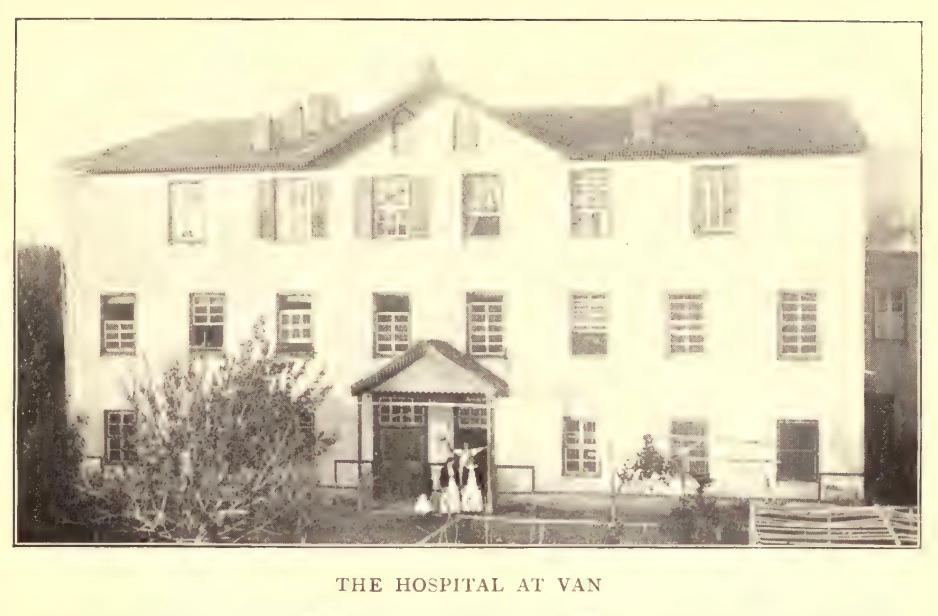


No comments:
Post a Comment